Full-Body PPF vs Partial PPF: What Coverage Do You Need?


Choosing between Full-Body PPF and Partial PPF is one of the first decisions a new car owner in Qatar faces after driving home a fresh set of keys. The choice shapes how much of the factory paint stays shielded from gravel, sun, and daily road grime. This guide breaks down both coverage options so you can pick the one that fits your car.
What is a Paint Protection Film?
Paint Protection Film is a clear, durable layer applied onto a vehicle's painted surfaces. It works as a barrier between the paint and the outside world, absorbing scratches and stone chips before they reach the factory finish. Fitted correctly, the film sits almost invisibly, letting the original paint color shine through untouched.
Why New Car Owners Choose Protection Early
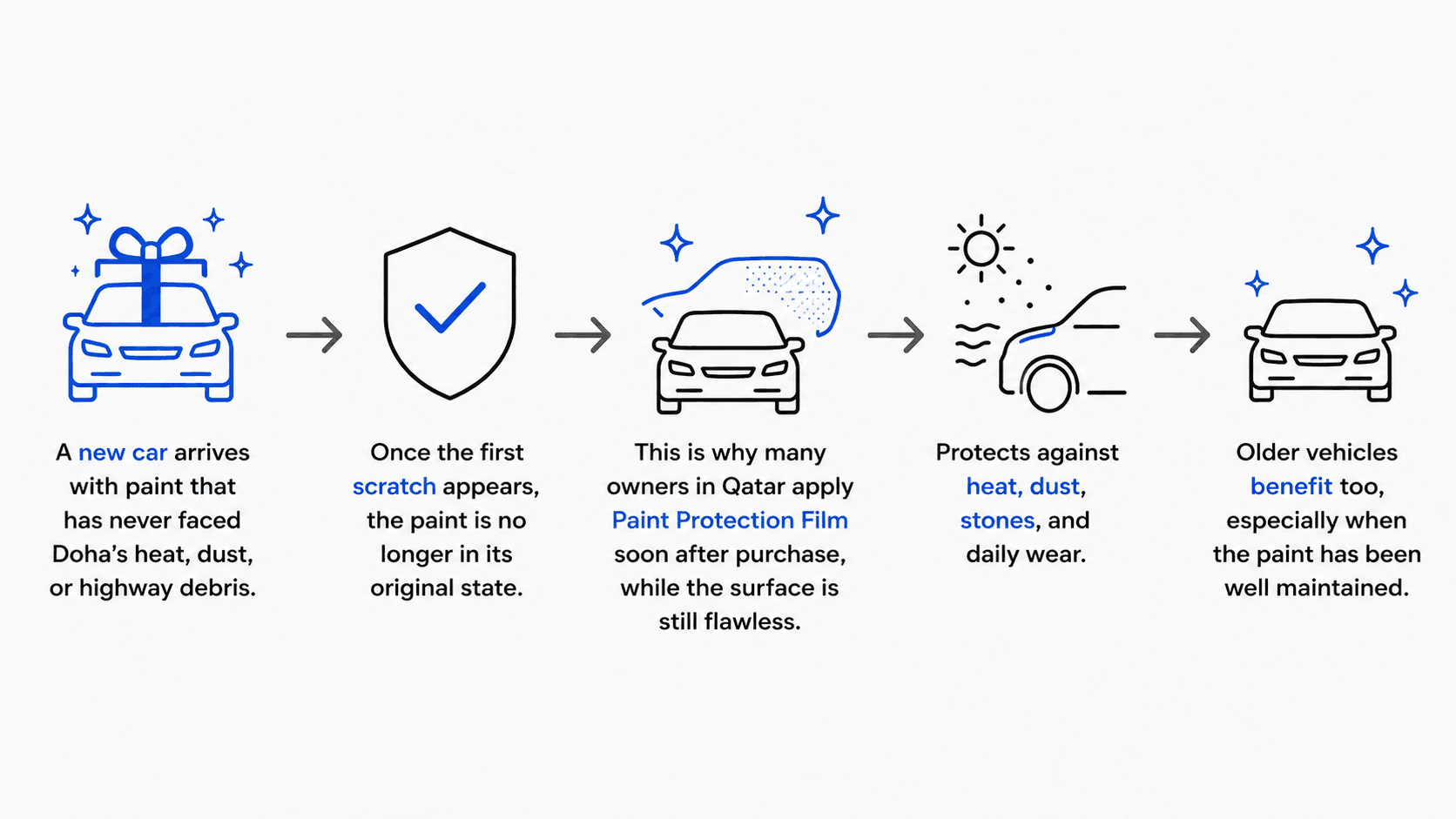
A new car arrives with paint that has never faced Doha's heat, dust, or highway debris. Once the first scratch appears, the paint is no longer in its original state. This is why many owners in Qatar apply Paint Protection Film soon after purchase, while the surface is still flawless. Older vehicles benefit too, especially when the paint has been well maintained.
What is Full-Body PPF?
Full-Body PPF is a complete covering that wraps every painted panel, leaving no exposed surface behind. Instead of protecting only high-impact areas, it treats the entire exterior as one continuous shield. Owners who want total peace of mind, without wondering which panel was left uncovered, usually lean toward this option.
Benefits
This package includes a 10-year warranty and self-healing technology, so light swirl marks and fine scratches fade on their own in warm weather. Anti-yellowing protection keeps the film clear rather than dulling over time. QAR Service adds free ceramic coating on the film, free ceramic coating for the wheels, and interior coating as part of the package, along with free pick-up, drop-off, and a 10-day inspection.
What is Partial PPF?
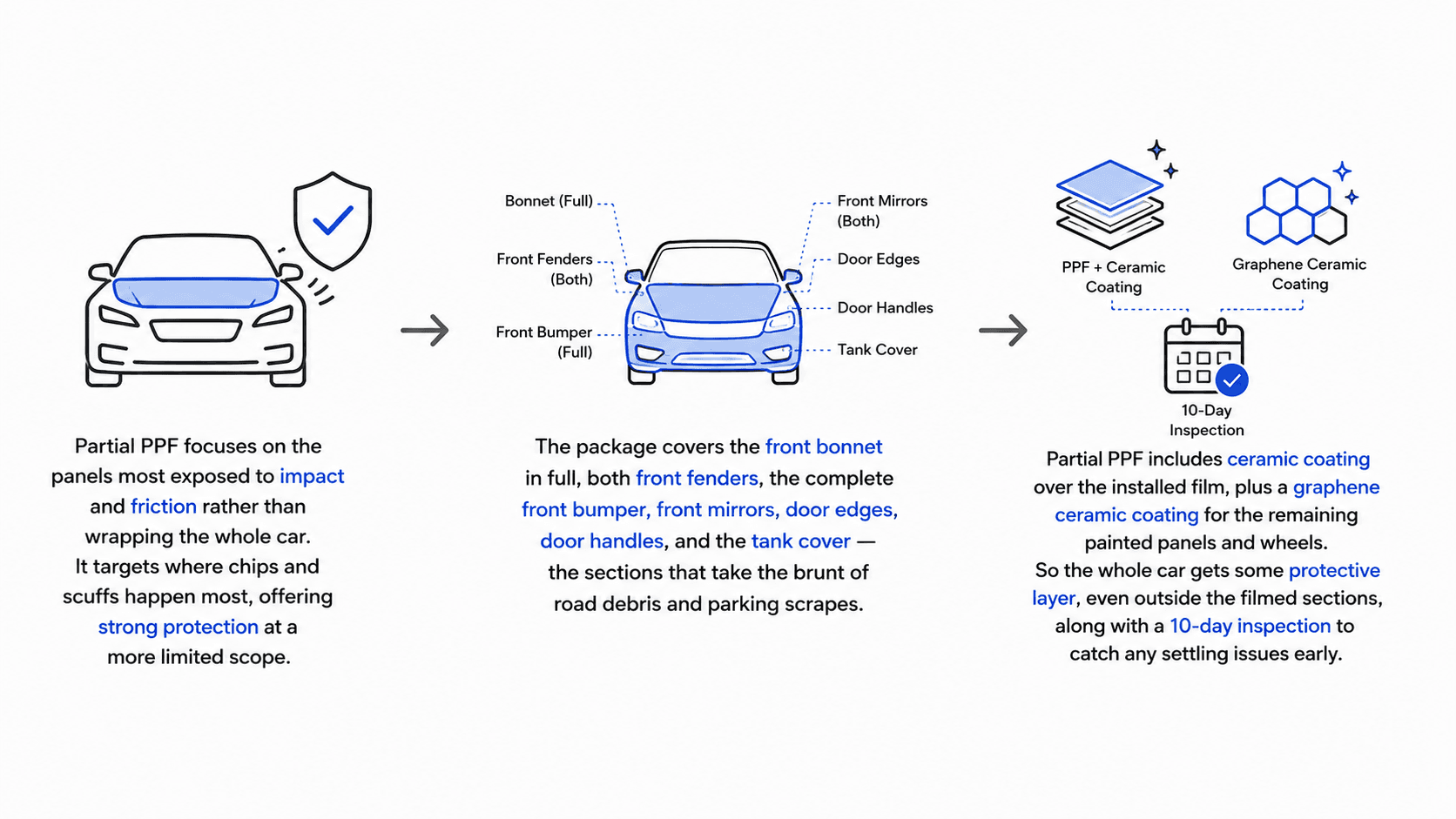
Partial PPF focuses on the panels most exposed to impact and friction rather than wrapping the whole car. It targets where chips and scuffs happen most, offering strong protection at a more limited scope.
Coverage Areas
The package covers the front bonnet in full, both front fenders, the complete front bumper, front mirrors, door edges, door handles, and the tank cover — the sections that take the brunt of road debris and parking scrapes.
Benefits
Partial PPF includes ceramic coating over the installed film, plus a graphene ceramic coating for the remaining painted panels and wheels. So the whole car gets some protective layer, even outside the filmed sections, along with a 10-day inspection to catch any settling issues early.
Full-Body PPF vs Partial PPF
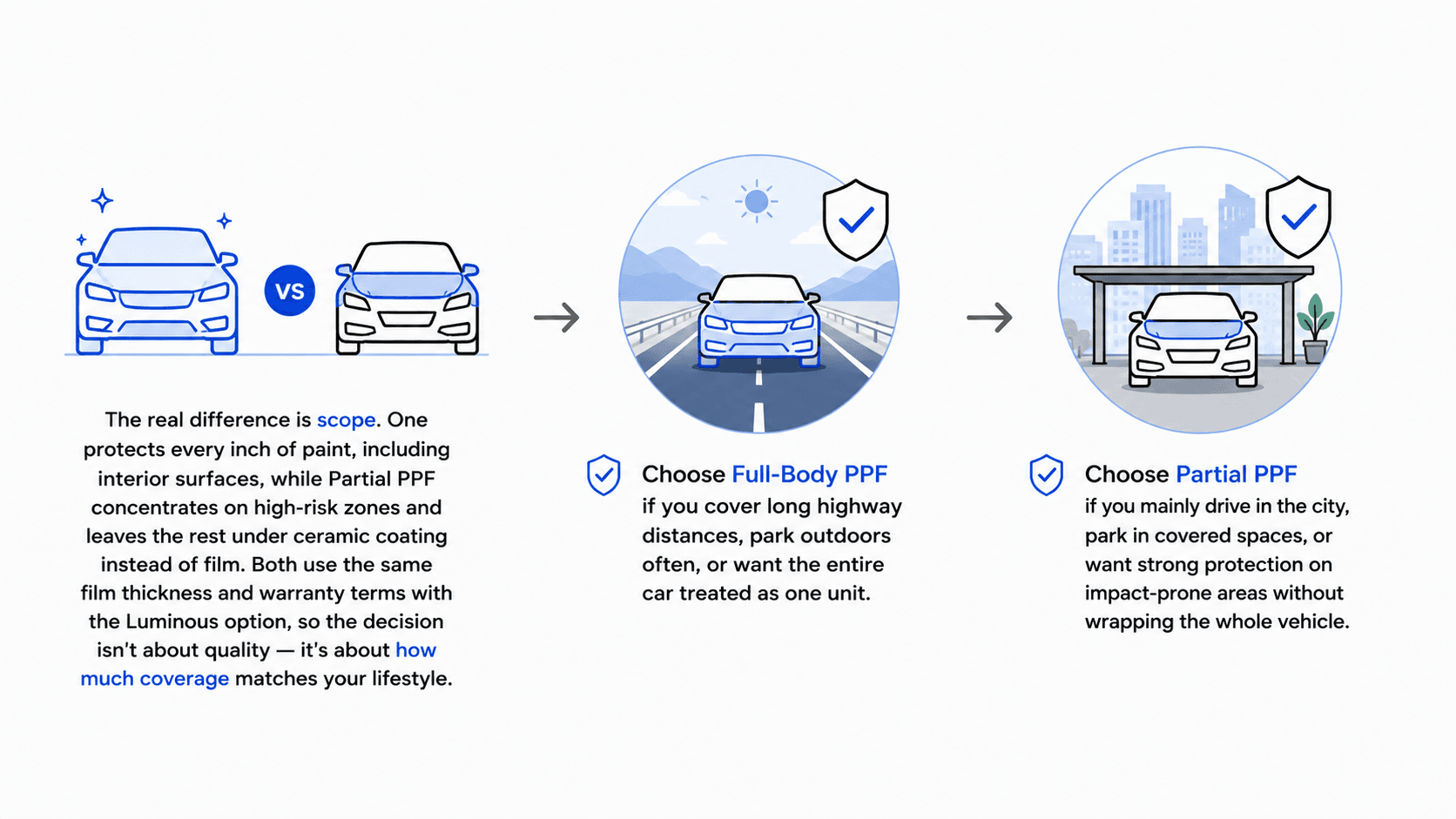
The real difference is scope. One protects every inch of paint, including interior surfaces, while Partial PPF concentrates on high-risk zones and leaves the rest under ceramic coating instead of film. Both use the same film thickness and warranty terms with the Luminous option, so the decision isn't about quality — it's about how much coverage matches your lifestyle.
Choose Full-Body PPF if you cover long highway distances, park outdoors often, or want the entire car treated as one unit.
Choose Partial PPF if you mainly drive in the city, park in covered spaces, or want strong protection on impact-prone areas without wrapping the whole vehicle.
How to Decide
Consider where the car spends most of its time, how far it travels weekly, and how long you plan to keep it. QAR Service offers two PPF brands to match different preferences: Luminous, made in the USA at 7.5mm thickness, and Rayshield at 8mm thickness. Pricing varies between the two, so customers can choose based on what suits their needs.
Conclusion
Both packages protect a car's paint with the same film quality, just at different scales. Full-Body PPF suits owners who want complete, edge-to-edge coverage, while Partial PPF works well for those focused on the most exposed panels. Whichever you choose, applying PPF early keeps your factory finish looking new for years to come.