How Nano Ceramic Tint Protects Car Interiors from Sun Damage


Qatar's summer sun is relentless. Inside an unprotected car, cabin temperatures can exceed 60–75°C on a hot afternoon, and the surfaces that suffer most are the ones closest to the glass the dashboard and leather seats. Nano ceramic tint protects leather seats and dashboards by blocking the specific wavelengths of sunlight that cause fading, cracking, and overheating. Unlike ordinary dyed films, nano ceramic window tint uses ceramic nanoparticles embedded in multiple film layers to reject both ultraviolet and infrared radiation without darkening the glass beyond legal limits. This article explains exactly how the technology works, what it protects against, and why car owners in Doha are choosing it as a long-term interior preservation strategy.
Why Qatar's Heat Threatens Car Interiors More Than You Realise
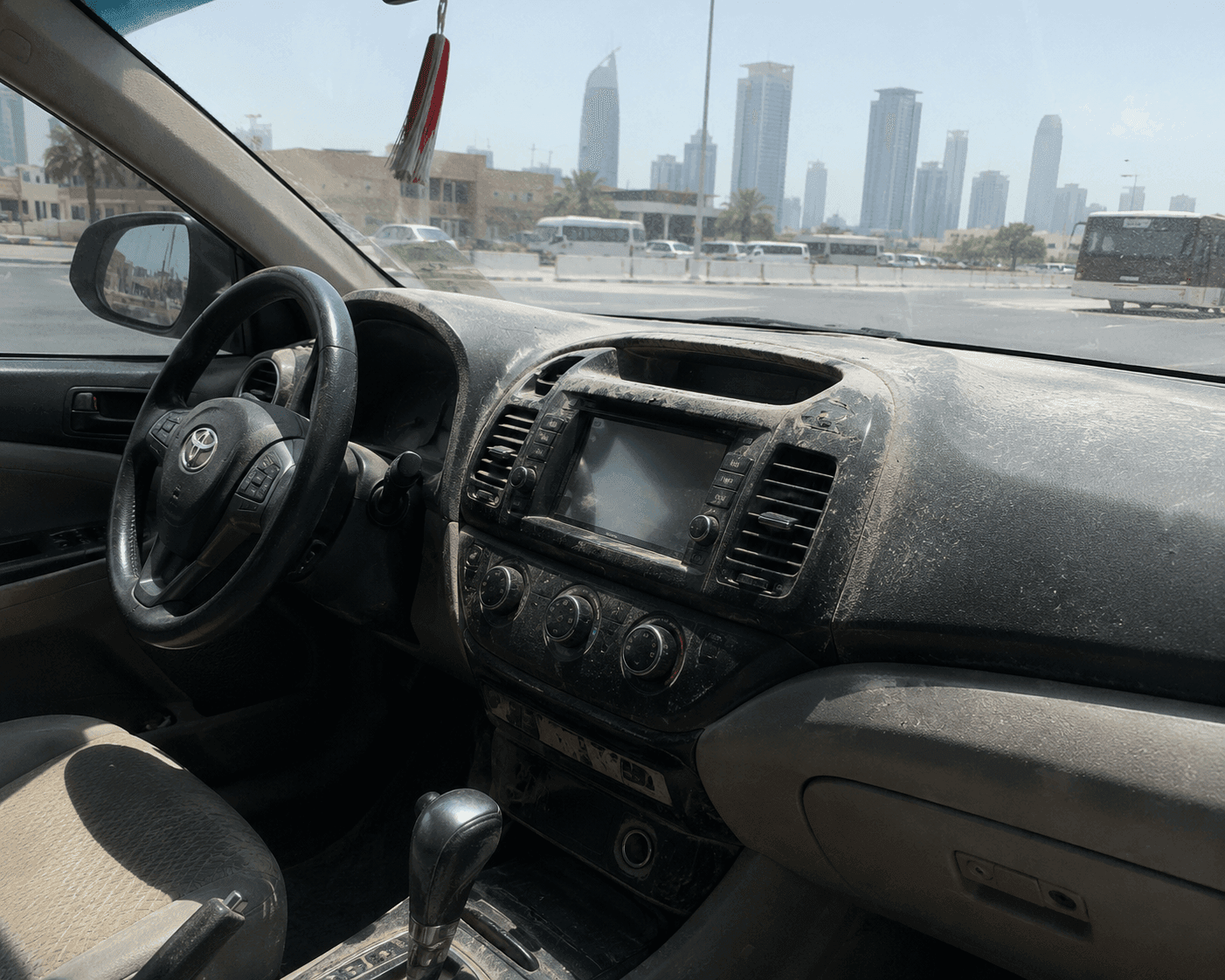
Direct sunlight carries three types of radiation — visible light, ultraviolet (UV), and infrared (IR). Of these, UV and IR are the primary culprits behind interior damage. Ultraviolet rays break down the chemical bonds in leather, vinyl, and plastics, causing colours to fade and surfaces to crack. Infrared radiation, meanwhile, is responsible for the intense heat you feel the moment you open a parked car door in summer.
In Doha and across Qatar, conditions that accelerate interior wear include:
•Daily UV index readings that regularly reach 10 or above — the extreme category
•Cabin air temperatures that can hit 60–75° °C in a closed vehicle parked under open sun
•Vehicles parked in direct sunlight for several hours each day, allowing solar heat to build up through the glass.
•High humidity levels that cause trapped heat to damage adhesives and leather stitching
•Glare from surrounding surfaces — concrete, sand, and other vehicles — that intensifies solar load
Standard factory glass blocks only a fraction of UV and almost no infrared radiation. Ordinary tint films add shade but lack the thermal-rejection capacity of ceramic-based films. This gap is precisely what nano ceramic tint fills.
What Nano Ceramic Technology Actually Does to Sunlight
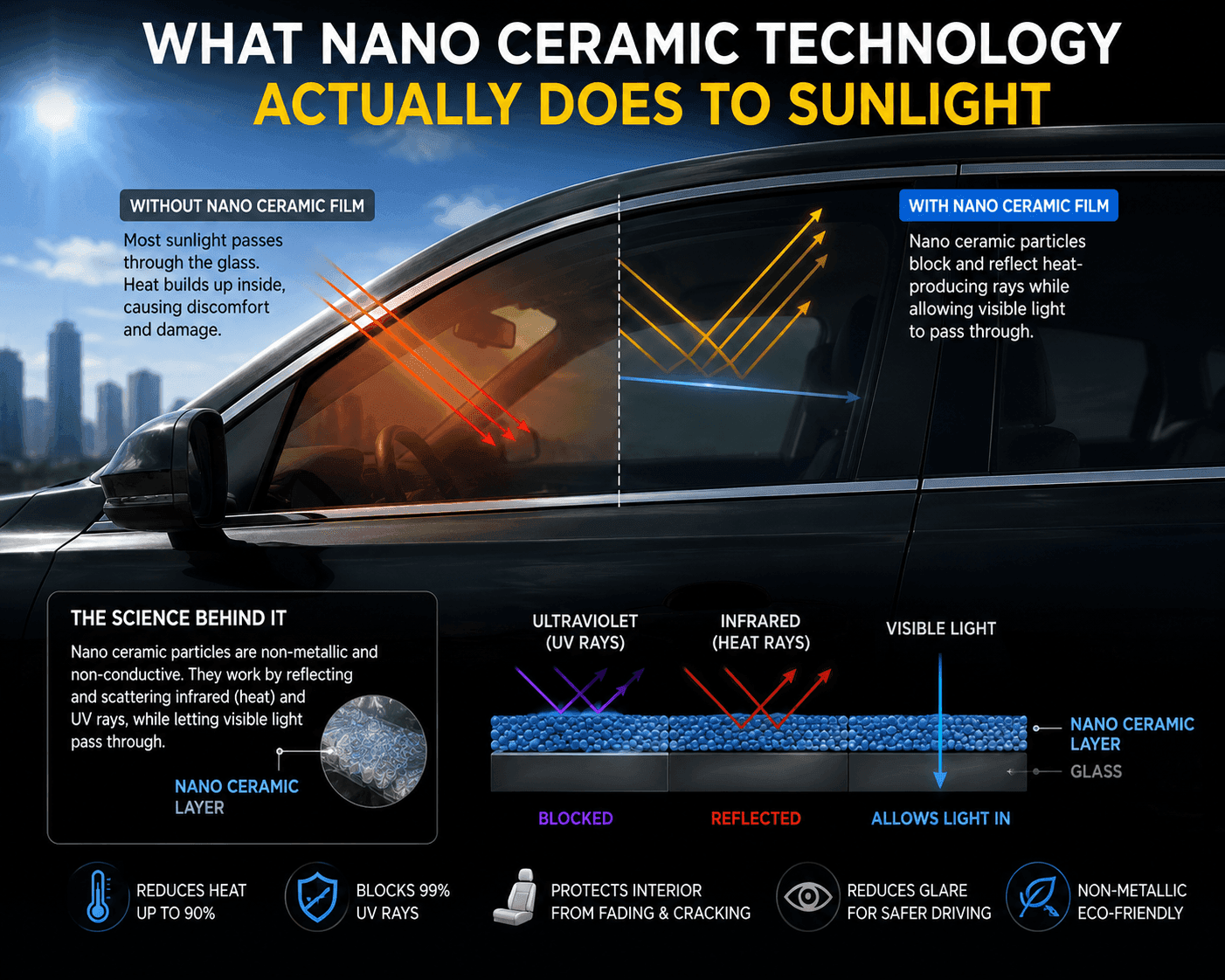
Nano ceramic tint works differently from conventional films. Rather than simply absorbing heat into the film itself , which can cause glass stress over time .Ceramic particles scatter and reflect infrared energy before it enters the cabin. This process is called infrared rejection, commonly measured as IRR (Infrared Rejection Rate).
Here is what a quality nano ceramic film delivers:
•99% UV protection — blocking nearly all ultraviolet radiation responsible for leather degradation
•High IRR (Infrared Rejection) ratings — often 95% or above — reducing the heat that reaches seats and trim
•Significant glare reduction without requiring very dark tint shades
•Non-metallic construction that does not interfere with GPS, mobile signals, or dash cameras
•Optical clarity that maintains natural colour rendering inside the cabin
The result is a cabin that stays meaningfully cooler, even under direct afternoon sun. Car heat control films based on ceramic technology address the source of the problem rather than just managing its symptoms.
How Nano Ceramic Tint Protects Leather Seats from Cracking and Fading
Leather is a natural material that responds poorly to sustained UV exposure. The fibres within the hide absorb ultraviolet energy, which gradually breaks down the proteins and oils that keep the leather supple. Over a period of months, this process produces visible cracking, discolouration, and surface hardening. Premium leather in high-end vehicles — including Land Cruisers, Lexus, and BMW models commonly seen in Doha — is particularly sensitive because it is thinner and more finely finished than standard leather.
Nano ceramic tint protects leather seats through a layered mechanism:
•UV blocking at the glass surface prevents the primary cause of leather breakdown from entering the cabin
•Reduced infrared heat lowers the ambient temperature that leather absorbs during parking
•Lower surface temperatures reduce the expansion and contraction cycle that causes stitching to loosen
•Glare reduction means less concentrated light falling on seat bolsters closest to the window
•Consistent cabin temperature reduces condensation effects that affect leather conditioning
Vehicles without window tint in Qatar typically show visible leather wear within two to three years. With a properly installed nano ceramic film, that timeline extends significantly — and the leather retains its original texture and colour for far longer.
Dashboard Protection: Why Plastic and Vinyl Are Equally Vulnerable
The dashboard sits directly in the path of sunlight entering the windscreen — the largest piece of glass on any vehicle. Modern dashboards use a combination of ABS plastic, vinyl, and rubber compounds, all of which are sensitive to sustained ultraviolet exposure. Fading typically starts at the top-centre of the dash and spreads outward. Warping follows in areas where heat concentration is highest.
Nano ceramic tint on the windscreen addresses this directly. High-quality windscreen ceramic films are engineered to maintain optical clarity while still delivering strong UV and IRR performance. The dashboard benefits from both the UV block and the thermal reduction — a combination that preserves both the aesthetics and the structural integrity of the panel. Window privacy tint options can extend this protection to side glass, reducing heat exposure on door panels, armrests, and rear passenger areas.
Selecting the Right Nano Ceramic Film for Doha's Climate
Not all ceramic films perform equally. Nano ceramic tint in Doha needs to meet a higher standard than products designed for temperate climates. The combination of intense sun, high ambient temperatures, and extended daily exposure means that film quality matters more here than almost anywhere else.
When evaluating a ceramic film for Qatar conditions, look for:
•IRR rating above 90% — critical for managing actual cabin heat, not just shade
•99% UV protection certification from a recognised testing body
•Scratch-resistant hard coating on the interior surface
•Manufacturer warranty of at least five years for film adhesion and performance
•Compliance with Qatar traffic regulations on permissible visible light transmission (VLT) levels
•Professional installation by trained technicians using clean-room conditions to prevent bubbling
Brands such as 3M, Llumar,Onyx, Rayshield, Suntek, and Xpel manufacture nano ceramic series specifically rated for high-heat regions. These films use multi-layer construction — typically six to twelve layers — where each layer targets a specific part of the solar spectrum. Car heat control films at this specification level produce measurable differences in cabin temperature that cheaper dyed alternatives cannot match.
Final Thoughts
Qatar's solar environment is genuinely harsh on vehicle interiors. Leather, vinyl, and plastic components absorb years of damage in a fraction of the time they would in cooler climates. Nano ceramic tint protects leather seats and dashboards by addressing the problem at the source — blocking 99% UV protection at the glass and rejecting infrared heat before it enters the cabin. The investment in a quality nano ceramic film pays back through preserved resale value, reduced interior restoration costs, and a noticeably cooler, more comfortable cabin. For professional nano ceramic tint in Doha, contact QAR Service to find the right film specification for your vehicle and usage.
Frequently Asked Questions
Does nano ceramic tint actually keep the car cooler inside?
Yes. Nano ceramic films reject infrared radiation — the component of sunlight responsible for heat — at rates above 90% in premium products. This measurably reduces cabin air temperature during parking and driving. In Qatar's climate, the difference between an untinted and ceramic-tinted vehicle can reach 15 to 20 degrees Celsius inside the cabin on a peak summer afternoon.
How long does nano ceramic window tint last in Qatar's heat?
Quality nano ceramic films from reputable brands carry manufacturer warranties of five to ten years. In Qatar's conditions, professionally installed ceramic tint typically maintains its performance characteristics for seven or more years without significant fading, bubbling, or adhesion failure. The ceramic particles themselves are highly stable and do not degrade under UV exposure the way dyed films do.
Does ceramic window tint affect visibility at night?
Quality nano ceramic films are engineered for optical clarity and do not distort vision or create noticeable colour shifts at night. Glare reduction properties actually improve nighttime driving comfort by reducing the blinding effect of oncoming headlights. Films installed at appropriate VLT levels for the windscreen maintain full daytime and nighttime visibility without compromise.
Which windows should be tinted for maximum interior protection?
Full-vehicle coverage delivers the most complete protection. The windscreen is the largest glass surface and the primary source of dashboard UV exposure, so a high-VLT ceramic windscreen film is essential. Front side windows protect driver and passenger leather most directly. Rear glass and rear side windows reduce heat build-up when the vehicle is parked and protect second-row passengers and upholstery.